

Ceiling Fans
Stylish Airflow Solutions for Comfort Year-Round
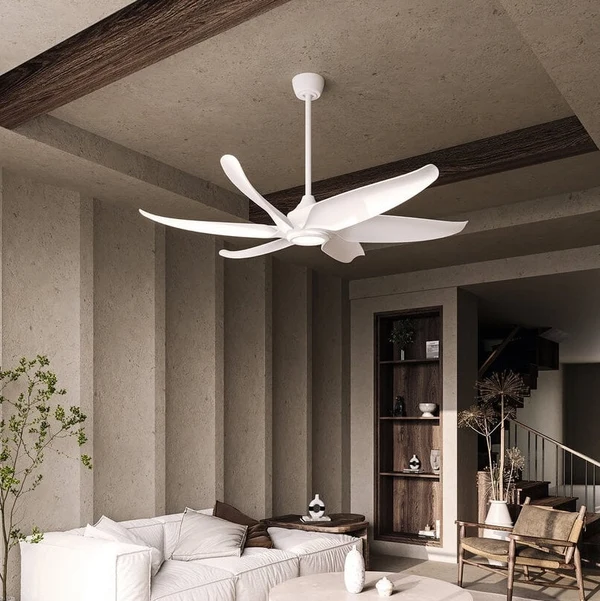
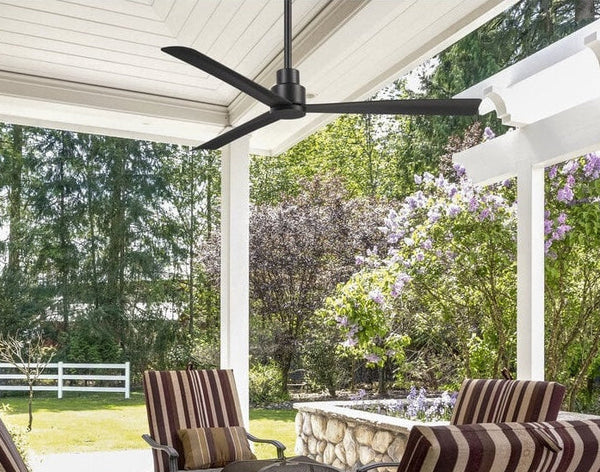
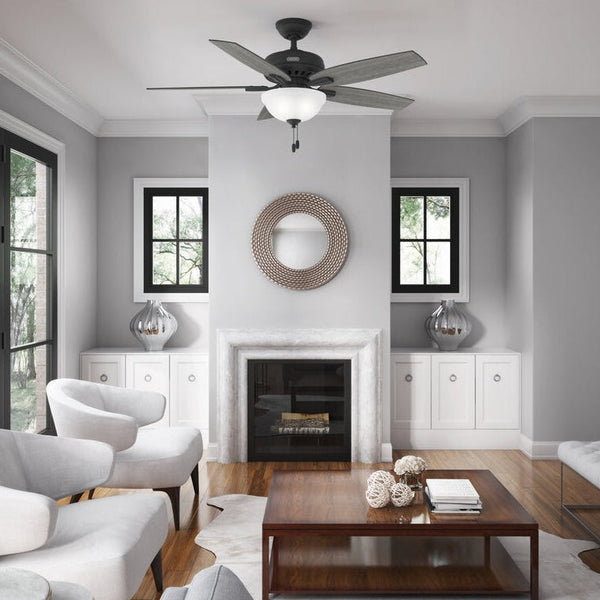

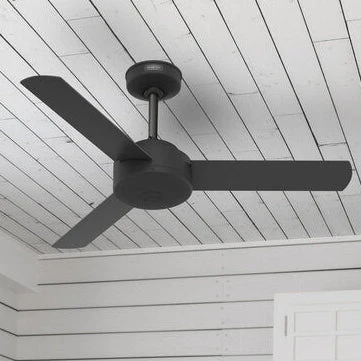
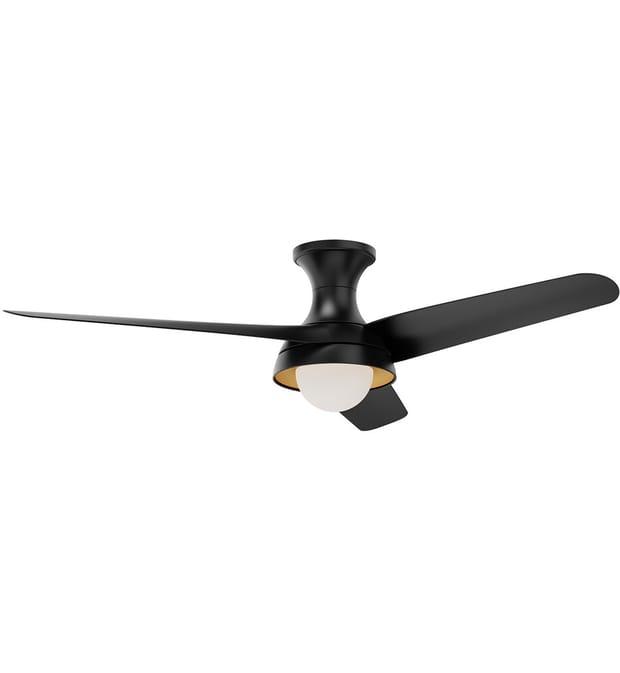
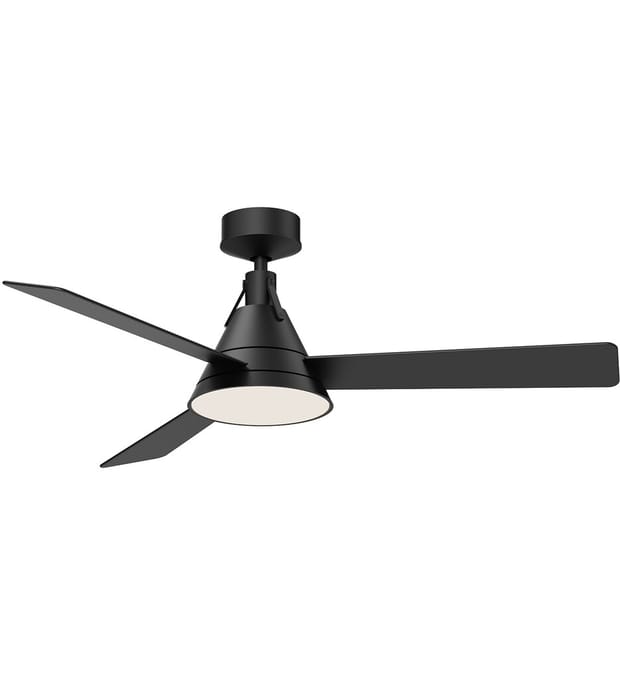
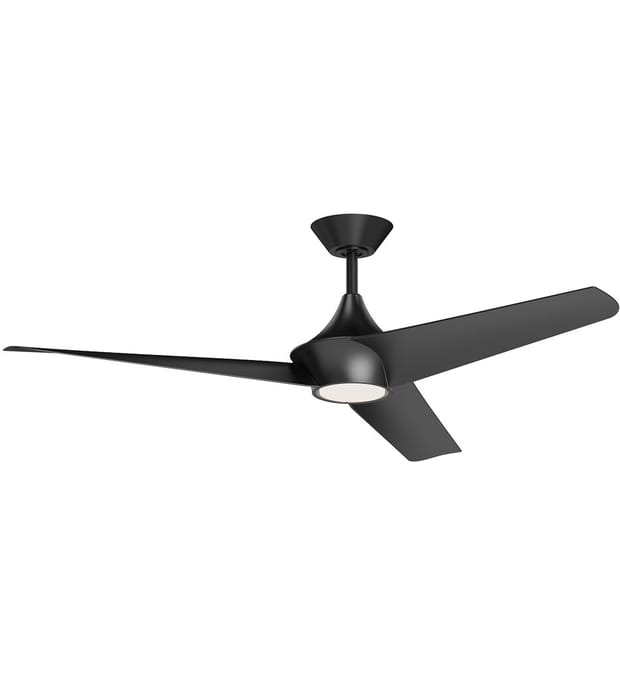
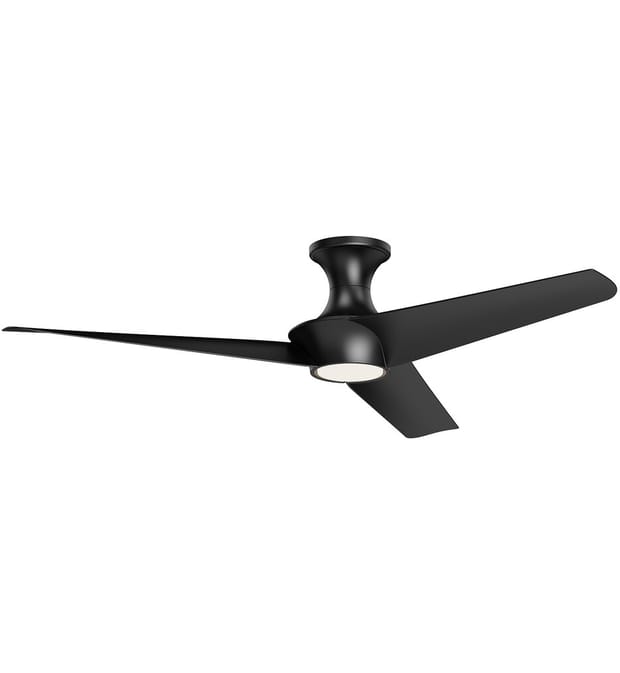






About Ceiling Fans
On a warm night, a ceiling fan's breeze lets you set the thermostat about 4°F higher and stay just as comfortable, because it cools people, not the room. In winter it can push warm air down from the ceiling. Get two things right and almost any style will work: a blade span sized to the floor area, and blades at least 7 ft above the floor, ideally 8 to 9 ft.
Buying guides
- Ceiling Fan Buying GuideNarrowed it down but still torn? Get fast, decisive answers on size, air movement, ratings, motors, controls, and lig...
- Ceiling Fan CFM Airflow GuideCFM tells you how much air a fan moves. Learn what airflow your room needs and how to compare fans beyond blade size.
- Ceiling Fan Controls guidePull chain, wall control, remote, or smart module? This guide walks through which ceiling fan control fits your wirin...
- Ceiling Fan Size GuideMatch blade span to your room's square footage, from small bedrooms to great rooms that need a 60" fan or two.
Types of ceiling fans
- Indoor Ceiling Fans For bedrooms, living rooms, kitchens and offices. Many come with a light kit, a remote or wall control, and a reversible motor for winter.
- Outdoor Ceiling Fans Built for porches, patios and pergolas. Damp-rated fans go under a solid roof that keeps rain off; wet-rated fans can take direct rain, snow and sprinkler spray.
- Indoor Flush Mount Ceiling Fans Also called huggers or low-profile fans. They mount tight to the ceiling with no downrod, the right choice for ceilings around 8 ft.
- Fandeliers A chandelier and a fan in one fixture. Good for bedrooms and dining rooms where you want the look of a light and the breeze of a fan.
- Smart Ceiling Fans Control speed and light from your phone or a voice assistant, and set schedules so the fan runs only when you need it.
How to choose a ceiling fan
- Size by room Measure the floor area and match it to the chart below. A 12 x 12 ft bedroom suits about 42" to 44"; larger bedrooms up to 225 sq ft suit 44" to 48".
- Ceiling height Blades need at least 7 ft of clearance and work best 8 to 9 ft up. On an 8 ft ceiling, choose a flush mount and check its listed blade height. On a 9 ft ceiling, use a 3" to 6" downrod; on 10 ft, about 12".
- Airflow Compare CFM (cubic feet of air moved per minute) as well as blade size. It's measured on high, and a fan rated 6,000 CFM moves twice the air of one rated 3,000.
- Motor DC motors typically run quieter and use less energy than AC motors, and many offer more speeds. AC motors cost less up front.
- Outdoors Damp rated under a solid roof that keeps rain off the fan. Wet rated anywhere rain, snow or sprinkler spray can reach it, including open or slatted pergolas. If wind-driven rain can reach the fan, choose wet rated.
Ceiling fan size chart
| Room size | Blade span | Typical rooms |
|---|---|---|
| Up to 75 sq ft | 29" to 36" | Bathrooms, laundry rooms |
| 76 to 143 sq ft | 36" to 42" | Kids' rooms, home offices |
| 144 to 225 sq ft | 44" to 48" | Bedrooms, kitchens |
| 226 to 400 sq ft | 50" to 54" | Living rooms, primary bedrooms |
| 401 to 600 sq ft | 56" to 60" | Great rooms, large primary suites, open dining areas |
| Over 600 sq ft | 62" to 72" and up, or two fans | Open floor plans, vaulted great rooms, large covered patios |
Going bigger than 56"? A ceiling of 9 ft or more keeps a large fan from crowding the room. On a lower ceiling, choose a low-profile model and check that the blades still clear 7 ft. Over 400 sq ft, match the layout. In a squarish great room, one 60" to 72" high-airflow fan works well. In a long room, or one with two zones such as living and dining, use two matching fans, one centered over each zone.
Ceiling fan specs explained
| Spec | What it means | What to look for |
|---|---|---|
| Motor: DC | Typically quieter and uses less energy than AC, usually 5 speeds or more | Bedrooms, living rooms, any fan that runs for hours |
| Motor: AC | The traditional motor, usually 3 speeds, lower price | Rooms where the fan runs now and then |
| CFM (airflow) | Cubic feet of air moved per minute on high | Higher moves more air |
| CFM per watt | How efficiently the fan turns power into airflow | Efficient DC fans can top 100 CFM per watt; compare fans at the same speed |
| Dry rated | Indoor use only | Bedrooms, living rooms, kitchens |
| Damp rated | Handles humidity and condensation, not direct water. The minimum over a tub or shower; choose wet rated if shower spray will hit the fan | Covered porches, screened patios, solid-roof pergolas and gazebos, bathrooms (at least 3 ft sideways and 8 ft up from a tub rim or shower threshold) |
| Wet rated | Listed for direct rain, snow and spray | Open patios, open or slatted pergolas, uncovered gazebos |
| Controls | Pull chain, wall control, handheld remote or app | A remote or smart control for high ceilings |
Ceiling fan questions
What size ceiling fan do I need?
Size the fan to the floor area. A 12 x 12 ft bedroom suits about 42" to 44", and bedrooms up to 225 sq ft suit 44" to 48". Most living rooms of 226 to 400 sq ft suit 50" to 54". Great rooms of 401 to 600 sq ft need 56" to 60", and bigger spaces 62" to 72" or more. The chart above covers every size.
Over 400 sq ft, one large high-airflow fan suits a squarish room. A long room, or one with two zones, does better with two matching fans.
How high should a ceiling fan hang?
Blades should be at least 7 ft above the floor; follow the fan's installation instructions and your local code. They move the most air 8 to 9 ft up. Above about 9 ft, the breeze weakens by the time it reaches you, which is why tall ceilings need a longer downrod.
Do I need a downrod?
On an 8 ft ceiling, no: choose a flush mount fan and check that its blades sit at least 7 ft up. On a 9 ft ceiling, a short 3" to 6" downrod is usually enough; on a 10 ft ceiling, use about 12". Vaulted and taller ceilings need a longer rod. On a sloped ceiling, check the fan's maximum slope: many downrod fans handle about 34°, steeper slopes need an angled-mount adapter, and flush mount fans can't go on a slope.
Whatever the mount, hang a ceiling fan from a fan-rated electrical box; a standard light box can't carry it.
Is a DC motor fan worth it?
For a fan that runs for hours, like one over the bed all night, usually yes. DC motors typically run quieter and use less energy than AC motors, and many offer more speed settings, which makes them a strong choice for bedrooms, living rooms and home offices. AC fans cost less up front and are still a practical choice for rooms where the fan runs now and then.
Can I use an indoor fan on a porch?
No. Indoor fans aren't built for moisture, and humidity can warp blades and corrode the motor. Use a damp-rated fan under a covered porch or screened patio, and a wet-rated fan anywhere rain, snow or sprinkler spray can reach it. Near the coast, look for salt-air or marine-grade finishes too.
Which way should a ceiling fan spin in summer and winter?
Usually counterclockwise in summer, looking up at the fan, so it pushes air straight down for a cooling breeze. In winter, clockwise on a low speed, so it pulls air up and pushes the warm air that collects at the ceiling back down the walls without a draft. Some models differ, so check your fan's manual.
